

There's no doubt that vivid descriptions can make your writing stand out. But there’s a fine line between drawing your readers into the scene and overwhelming them with too much detail. So how do you strike the right balance?
Here are five simple, actionable tips to help you craft immersive descriptions that enhance your writing—without overdoing it.
1. Use Specific, Sensory-Rich Details
The best descriptions help readers see, hear, smell, taste, and feel what’s happening. Instead of relying on vague adjectives, focus on precise, sensory-rich details.
❌ Weak description: She walked into a café.
✅ Vivid description: She stepped into the café, the air thick with cinnamon and fresh coffee. Muffled chatter blended with the hum of an espresso machine.
Quick tip: Next time you describe a setting, try incorporating at least three senses to bring it to life.
2. Avoid Overloading with Adjectives
A common mistake in descriptive writing is relying too much on adjectives. Instead of piling them on, choose strong nouns and verbs that do the heavy lifting.
❌ Too many adjectives: The small, dimly lit, old bookstore smelled musty and dusty.
✅ Stronger alternative: The bookstore’s wooden shelves bowed under the weight of timeworn pages, the air tinged with the scent of aged paper.
Quick tip: If a sentence feels cluttered with adjectives, try removing a few and see if it still conveys the same effect.
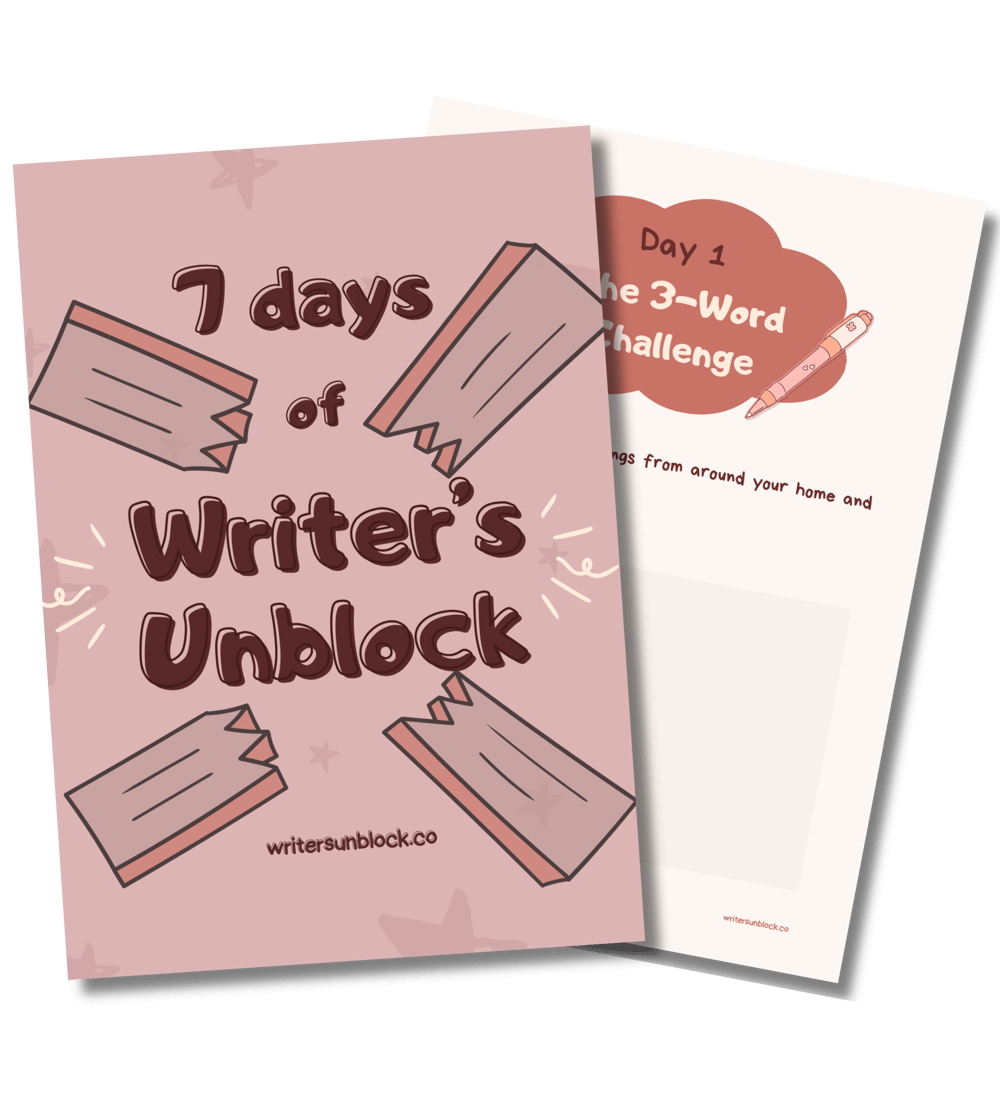
Sign up below to get this FREE writing prompt book
👇🏽
3. Balance Description with Story Flow
Ever read a book where a description dragged on for so long that you lost track of what was happening? Overloading your reader with too many details at once can slow the pace and weaken your story.
❌ Too much description: The sky, a swirling mix of indigo and sapphire, stretched endlessly over the jagged, pine-covered mountains that loomed over the valley below, where a narrow, winding stream cut through fields of golden grass.
✅ Balanced description: The indigo sky stretched over pine-covered mountains, where a narrow stream cut through golden fields.
Quick tip: If a description interrupts the flow of action or dialogue for too long, shorten it or break it up into smaller pieces.
4. Use Metaphors and Comparisons Thoughtfully
A well-placed metaphor or simile can make your descriptions more engaging, but using too many (or forced ones) can make your writing feel cluttered or unnatural.
❌ Overloaded metaphor: Her hair was like the golden wheat fields of summer, shimmering under the sun’s warm embrace, cascading like a waterfall down her back.
✅ Stronger alternative: Her golden hair shimmered in the sunlight.
Quick tip: If a metaphor feels like a stretch, simplify the sentence for a more natural effect.
5. Read Your Work Aloud for Clarity
One of the best ways to catch overly complicated descriptions is to read your writing aloud. If a sentence feels awkward or too long-winded when spoken, it’s probably too much on the page as well.
❌ Too complex: The sky, painted in a mosaic of pink and orange hues, seemed to ripple like water, a symphony of color orchestrated by the setting sun.
✅ More natural: The sky blushed pink and orange as the sun dipped below the horizon.
Quick tip: If you find yourself running out of breath before finishing a sentence, it’s a sign to simplify your description.
Final Thoughts + A Gift for You
Vivid descriptions should make your writing stronger—not distract from the story. By using sensory details, cutting unnecessary adjectives, balancing pacing, and refining your metaphors, you can craft descriptions that truly enhance your writing.
✨ Want more creative inspiration? Download my free interactive writing prompt book and get unstuck in just 7 days!✨